What is rTMS?
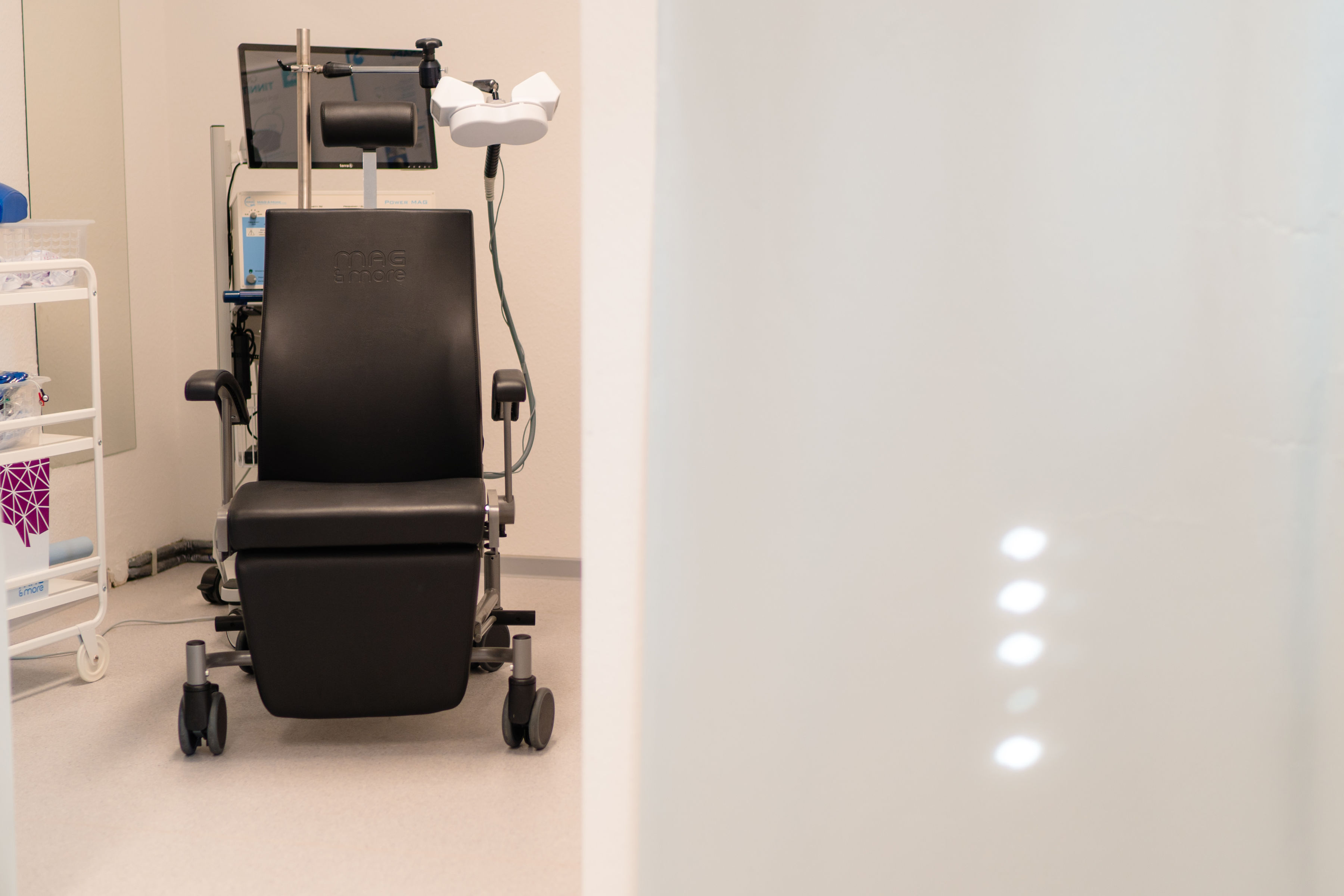
During rTMS, a magnetic coil is placed externally over defined areas of the head. The short magnetic impulses influence the activity of nerve cells in the underlying brain regions.
The procedure has been clinically established for years and is primarily used when targeted, non-medication-based support appears appropriate.
Typical treatment process
Before treatment begins, a medical consultation takes place in order to assess the indication, possible exclusion criteria and the current treatment strategy.
The treatment itself is performed while seated. The magnetic coil is positioned precisely and stimulation is delivered in several short series. Depending on the indication, multiple sessions are required.
When is rTMS used?
rTMS is used for selected neurological and psychiatric indications. Whether it is suitable in an individual case always depends on medical assessment, diagnosis and previous therapies.
The original rTMS website provides additional medical information and further professional background.